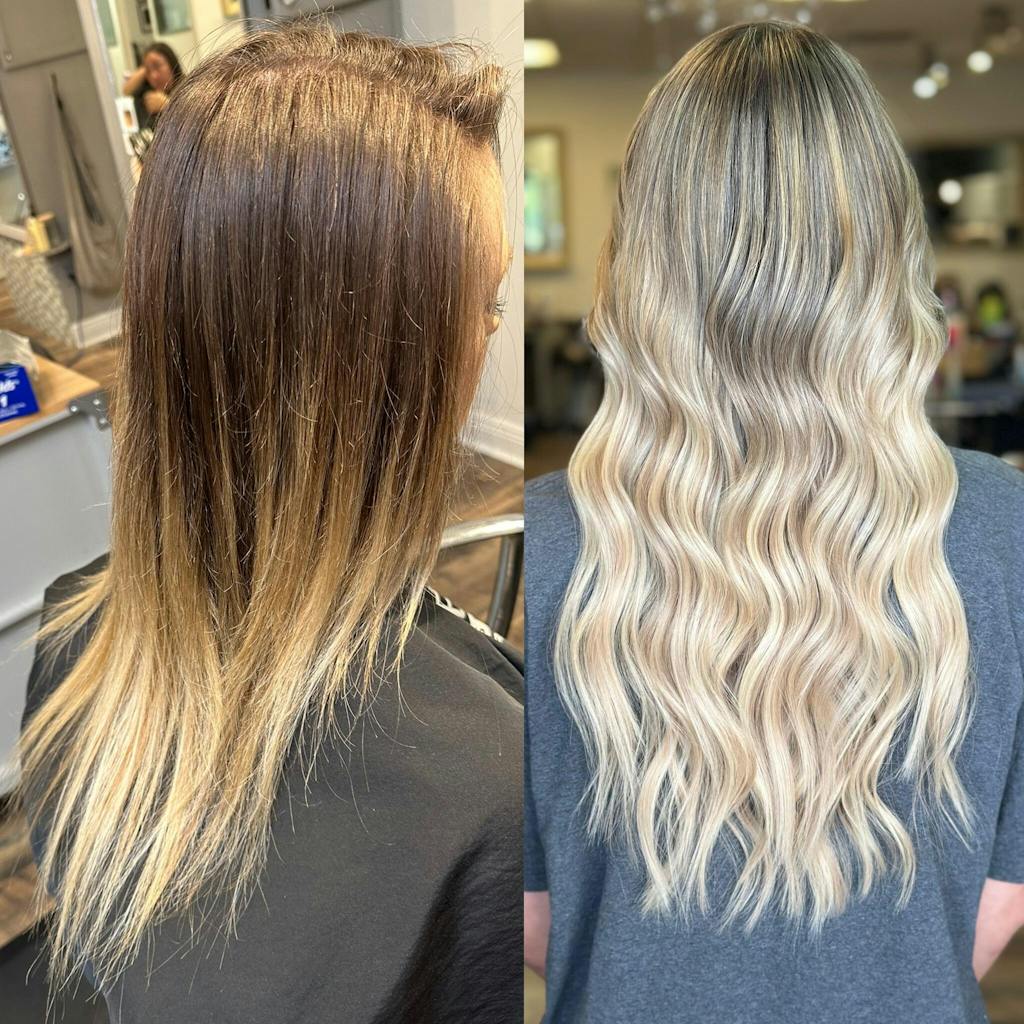
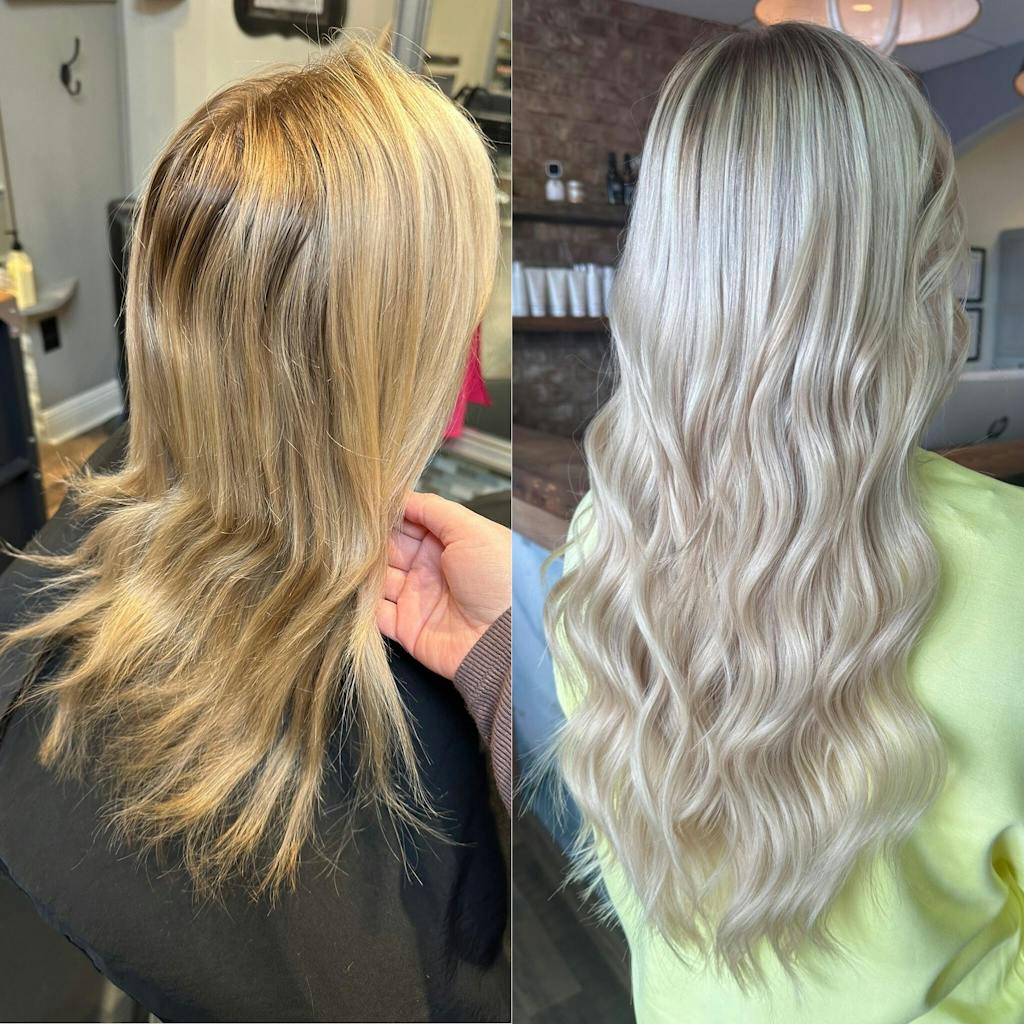
It's 7:45 PM on a Saturday.
You've been on your feet for eleven hours. Your lower back is screaming. Your wrists ache from the 400th foil you've placed this week. You just finished your sixth color correction of the day — a five-hour marathon that earned you $280 after product costs.
You do the math in your head: roughly $56 per hour before chair rent, taxes, and supplies.
Tomorrow? You'll do it again. And the next day. And the next.
This isn't a cautionary tale. It's the reality for thousands of licensed stylists across the United States — talented professionals who traded passion for exhaustion, artistry for survival mode.
But here's what's changing: A growing number of stylists are rewriting the math entirely. They're working fewer hours, serving fewer clients, and earning more than they ever did behind a full book of color appointments.
Their secret? Hair extensions.
Not as a side service. Not as an upsell. As their primary revenue driver — and what many are now calling their "retirement plan."
The Income Ceiling No One Talks About
Let's start with an uncomfortable truth: traditional salon services have a built-in income ceiling.
Here's the math most stylists know but rarely say out loud:
|
Service |
Average Price |
Time Required |
Hourly Rate (Gross) |
|
Women's Cut & Style |
$65–$95 |
45–60 min |
$65–$95/hr |
|
Single Process Color |
$85–$150 |
60–90 min |
$56–$100/hr |
|
Partial Highlights |
$150–$200 |
90–120 min |
$75–$100/hr |
|
Full Balayage |
$250–$350 |
180–240 min |
$69–$87/hr |
|
Color Correction |
$300–$500 |
240–360 min |
$50–$83/hr |
Now compare that to extension services:
|
Service |
Average Price |
Time Required |
Hourly Rate (Gross) |
|
Tape-In Install (Full Head) |
$600–$1,000 |
90–120 min |
$300–$500/hr |
|
Hand-Tied Weft Install |
$1,000–$2,000 |
150–180 min |
$333–$666/hr |
|
K-Tip/Fusion Install |
$1,200–$2,500 |
180–240 min |
$400–$625/hr |
|
Extension Maintenance/Move-Up |
$200–$400 |
45–75 min |
$160–$320/hr |
The difference isn't incremental. It's exponential.
A stylist doing four color appointments a day at $175 average earns $700. A stylist doing one hand-tied extension install earns $1,200–$1,800 — in the same amount of time.
Annualized, that's the difference between earning $85,000 and earning $200,000+.
Same hours. Same chair. Completely different life.

The Physical Toll of High-Volume Color Work
Beyond income, there's a reality that doesn't show up on anyone's service menu: the body keeps score.
According to the Professional Beauty Association, the average career lifespan of a licensed cosmetologist in the U.S. is just 8 to 10 years. Not because they lose their passion — but because their bodies give out.
Repetitive motion injuries. Chronic back pain. Carpal tunnel. Varicose veins from standing 10+ hours daily. Chemical exposure from years of color mixing.
A 2022 survey by Behind the Chair found that:
● 71% of stylists report chronic pain related to their work
● 63% have considered leaving the industry due to physical burnout
● 58% say they cannot envision doing hair past age 50
The industry celebrates hustle culture. Fully booked calendars. Six-day weeks. But the cost is hidden in cortisone shots, chiropractor bills, and early retirement that wasn't a choice.
Extensions change the physical equation.
Instead of lifting arms overhead for hours of foiling, extension work involves more varied movement. Instead of constant chemical exposure, you're working with clean, pre-colored hair. Instead of booking eight clients to make your day profitable, you're booking two or three.
It's not just about earning more. It's about lasting longer.

The "Retirement Plan" Concept: Building a Specialty That Ages Well
Here's what smart stylists are realizing: Your career is an asset. And assets should appreciate, not depreciate.
Traditional styling is a depreciating career model. The longer you do it, the more your body breaks down, the less sustainable it becomes. You trade time for money until there's no time — or body — left to trade.
Extensions flip this model.
When you build a reputation as an extension specialist, you're building:
● A premium client base willing to invest $1,000+ per appointment
● Recurring revenue through maintenance appointments every 6–8 weeks
● Referral momentum from clients who love showing off their transformations
● Transferable expertise that travels with you — to any city, salon, or suite
One extension client can generate $3,000–$6,000+ in annual revenue through installs, move-ups, and product purchases. Ten loyal extension clients? That's $30,000–$60,000 from just ten people.
Compare that to color clients who may visit every 6–10 weeks for $150–$250. You'd need 30–40 color clients to match what 10 extension clients generate.
This is the "retirement plan" stylists are talking about: A smaller, higher-value book that protects your body, pays your bills, and actually compounds over time.
Addressing the Objections: What Holds Stylists Back
Despite the math, many stylists hesitate. The objections are predictable — and worth addressing head-on.
"I don't have extension clients."
You don't have them yet because you haven't positioned yourself to attract them. Extension clients don't find you by accident. They find you because you've made it clear — through your portfolio, your social presence, and your confidence — that extensions are your specialty.
Build the skill. Build the visibility. The clients follow.
"The startup cost is too high."
Yes, quality extensions require an investment. A starter kit may run $2,500–$25,000+ for a full salon. But consider the ROI: A few hand-tied installs at $1,500 covers your product investment. Everything after that is profit margin.
Compare that to color, where product costs eat 20–30% of every service and you're constantly restocking.
"There's a learning curve."
Absolutely. Extension work requires proper training — and not all training is created equal. But this is also your competitive advantage. Most stylists won't invest in proper certification. The ones who do become the go-to specialists in their market.
"My clients won't pay that much."
Then you need different clients. And that's okay. Building an extension business often means elevating your clientele, not converting your current book. You're not abandoning your regulars — you're adding a premium tier that attracts a premium audience.
The Quiet Revolution Happening Behind the Chair
Here's what's not making headlines but is reshaping the industry:
Stylists in their 30s and 40s — the ones who've done the hustle, built the clientele, and now feel the weight of it — are pivoting. Quietly. Strategically.
They're getting certified. They're investing in quality hair. They're raising their prices unapologetically. And they're working less while earning more.
They're not chasing trends. They're building sustainable careers.
This isn't about choosing extensions over color. It's about recognizing that your most valuable asset — your time, energy, and body — deserves a service model that protects it.
The stylists who figure this out in 2025 and 2026 will be the ones still thriving in 2035. The ones who don't? They'll be the cautionary tales we reference at trade shows.
Where KmXtend Fits In
At KmXtend, we don't just sell hair. We partner with stylists who are ready to build something bigger than a full book with stylist discounts, wholesale options and even private label options if desired.
Our extensions are designed for professionals who understand that quality matters — for client retention, for install longevity, and for the reputation you're building.
If you've been thinking about making the pivot — or even just exploring what's possible — we're here for that conversation.
No pressure. No gimmicks. Just real strategy for stylists who think long-term.
The Bottom Line
The math is clear. The physical reality is undeniable. The industry is shifting.
Extensions aren't a trend. They're a career strategy. And for stylists willing to invest in the skill, they're the closest thing this industry has to a retirement plan.
The question isn't whether you can make this pivot.
The question is: How much longer can you afford not to?
Ready to explore what's possible? Take a look at some of our NEW Wholesale Packages and let me know if you're ready to get started.