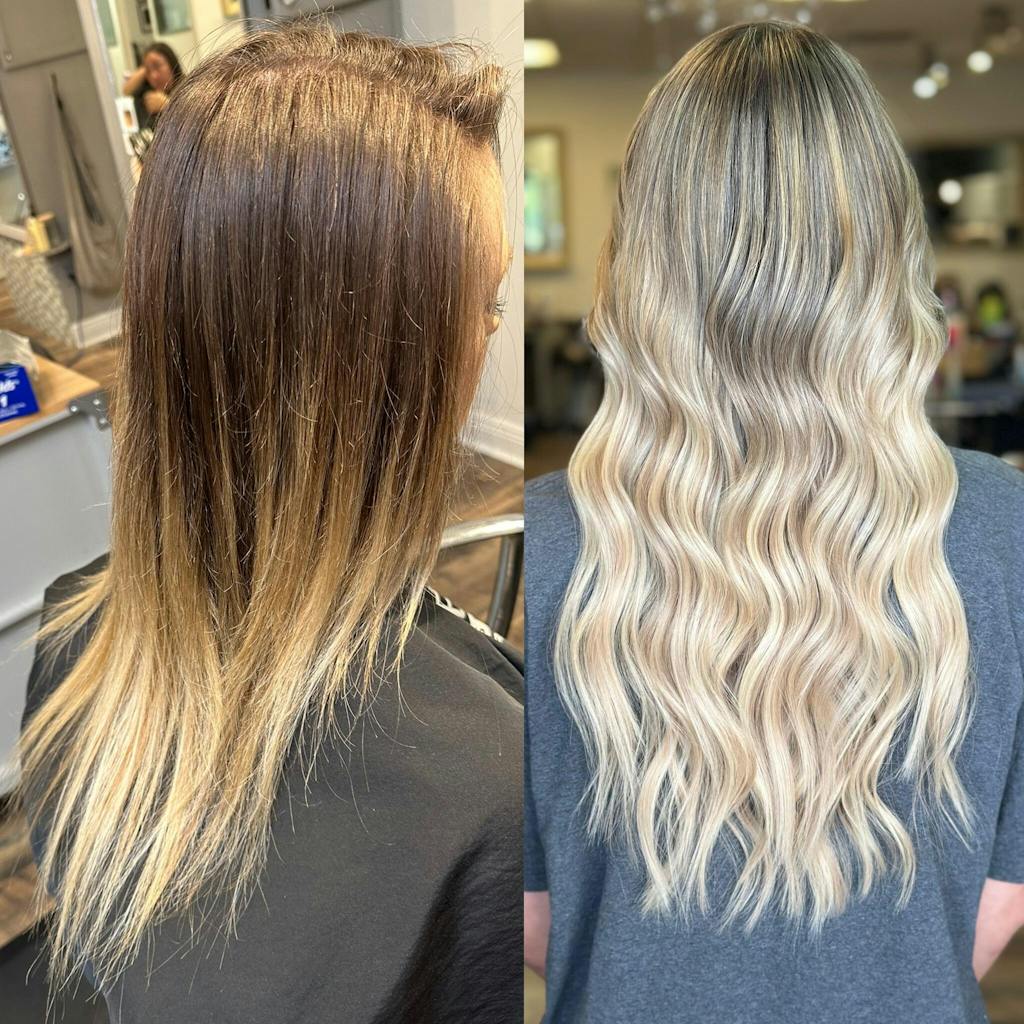
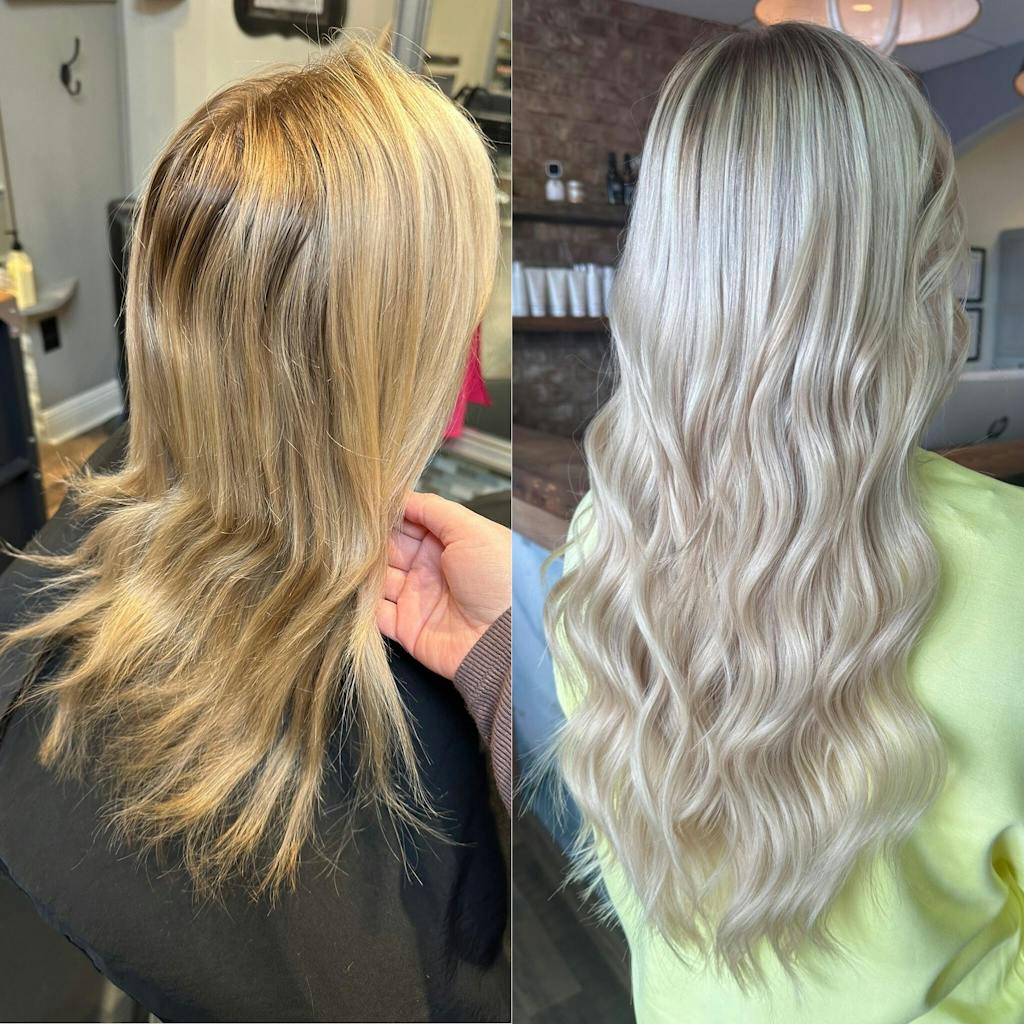
I can tell you that 90% of custom color failures trace back to decisions made before the hair ever reached your station.
When a client asks for cowboy copper hair color on extensions, or that rich mocha mousse depth flooding editorial pages, your success was already determined. It depends on whether cuticles remained intact during processing, whether silicone coatings are masking invisible damage, and whether porosity is consistent enough to accept pigment evenly.
This is the conversation most extension education skips. Let's fix that.
Why Trend Colors Demand More From Your Base Hair
Today's trending colors don't forgive mediocrity. We're not working with single-process shades that hide inconsistencies—these colors expose every weakness instantly.
Cowboy copper—that lived-in, warm-toned copper with dimensional honey undertones—requires hair that handles both deposit and lift simultaneously. When you're creating cowboy copper with blonde dimensional pieces, you're asking some sections to lift and hold champagne tones while others deposit rich copper without over-saturating.
If your base hair has inconsistent porosity—and most processed extensions do—you'll spend three hours correcting what should take forty-five minutes.
Mocha mousse hair extensions for dark brunettes present different challenges entirely. That soft, dusty brown with subtle warmth requires neutral underlying pigment. If your extension base carries hidden brassiness from poor processing, your mocha goes muddy. If there's residual ash from manufacturing color correction, your mocha goes flat and lifeless.
Colorists blame their formulation, timing, and technique—when the hair simply couldn't perform what they asked. No formula corrects structural damage. No technique compensates for stripped cuticles.
Understanding What "Virgin Quality Remy" Actually Means

The industry keeps these terms intentionally vague because confusion is profitable.
Virgin quality remy hair extensions should mean hair that's never been chemically treated—no dyes, perms, or processing. True virgin hair commands premium pricing because it's increasingly rare; global demand far exceeds authentic supply.
Full cuticle intact remy hair extensions means the outer protective layer remains undamaged and aligned root-to-tip. This alignment prevents tangling and deterioration, but more importantly for colorists—cuticle integrity directly controls porosity.
Think of cuticles as roof shingles. When flat and aligned, color enters and exits predictably. Damaged or stripped cuticles create gaps where color absorbs unevenly, fades unpredictably, and processes at different rates across the same weft.
When evaluating extensions, I perform a simple test every stylist should learn: run fingers from end to root, then root to end. Intact cuticles feel smooth in the natural direction and create slight resistance reversed. Extensions feeling identical both directions have been acid-bathed to strip cuticles entirely—then masked with silicone.
That coating becomes your enemy when color enters the equation.
The Silicone Problem Nobody Discusses

Here's what manufacturers don't advertise: heavy silicone coating is how damaged extensions pass quality inspection.
When cuticles are removed during processing, hair becomes rough and tangles easily. The industry solution is coating—silicone polymers creating artificial smoothness, filling gaps where cuticles should be. The hair feels luxurious initially and photographs beautifully.
Then you apply color.
Silicone creates a hydrophobic barrier repelling water-based color. Pigment can't penetrate evenly—you see splotchy uptake and results that look acceptable wet but reveal flaws once dried.
Worse: silicone degrades with each wash. Within three weeks, coating breaks down. What remains is the damaged hair silicone was hiding, now further compromised by chemical services it couldn't structurally handle.
Your client returns with matted, faded extensions. They blame you.
This is why silicone-free real human hair extensions have become non-negotiable for serious colorists. Without coating, you see exactly what you're working with. The texture might feel less "polished" initially—there's natural texture to healthy cuticles that coated hair lacks. But performance under color, and longevity afterward, is incomparable.
The Technical Approach
Cowboy copper hair color succeeds when warmth feels organic rather than placed—dimension mimicking natural sun exposure with intentional copper intensity.
Selecting the Right Base
Work with extensions at Level 6-7 for optimal flexibility. Darker bases require lifting that compromises structural integrity. Lighter bases may not hold copper richness long-term.
Start with neutral-to-warm undertones. Avoid bases with visible ash—you'll fight that coolness throughout the entire process.
The Dimensional Technique
This is where cowboy copper with blonde elements enter, and where extensions give you advantages over natural hair. Because you're working with individual wefts before installation, you can create impossible-on-head dimension.
I section extensions into three categories:
Category A (40% of wefts) - Rich Copper:
Demi-permanent blend of copper, warm gold, and neutral brown kicker (2:2:1 ratio). The brown prevents "jack-o-lantern" orange.
Category B (35% of wefts) - Warm Champagne:
Golden beige bridging copper and blonde—preventing harsh lines when installed together.
Category C (25% of wefts) - Copper Shadow:
Darker, richer copper reading almost auburn. These ground the look and prevent over-highlighted appearance.
Strategic Installation
Alternate categories unpredictably: A, B, C, A, A, B, A, C, B, A. Place shadows near the nape and part line where depth occurs naturally. Place champagne heavily around the face where sun would lighten hair.
Finish with acidic copper gloss to seal cuticles. Extensions maintaining cuticle alignment hold gloss treatments significantly longer than processed alternatives.
Building Mocha Mousse Depth
Mocha mousse achieves richness through subtlety—depth through restraint.
Why This Shade Fails on Damaged Extensions
The dusty quality making mocha mousse editorial-worthy requires consistent light reflection. Healthy cuticles reflect uniformly, creating depth that reads "expensive." Damaged cuticles scatter light unpredictably, making the same formula look flat and lifeless.
For mocha mousse hair extensions for dark brunettes, base selection matters more than technique.
Selecting the Perfect Base
Start with Level 3-4 extensions. The undertone is non-negotiable: neutral to cool. Check under natural light—if you see gold or orange warmth, choose different extensions. That underlying warmth pulls muddy in mocha formulations every time.
I've had stylists argue they can "correct" warm undertones with ash additions. You can't. Adding ash creates greenish casts under certain lighting. The only solution is starting with the right base.
The Formula Philosophy
Mocha mousse requires translucency, not heavy deposit. The biggest mistake is over-depositing, thinking more pigment means richer results.
The opposite is true.
Using demi-permanent, I create mocha mousse with equal parts neutral and ash brown at target level, plus one-eighth part violet to neutralize hidden warmth. Mix with low-volume developer ensuring deposit without lift.
Process without heat until hair reaches that signature dusty quality—usually 25-35 minutes. The warmth should emerge subtly, more whisper than statement.
Finding Extensions That Perform Long-Term
The question I hear constantly: "Where do I find the best hair extensions that stay soft after months of wear?"
My answer: look at processing, not price.
Extensions maintaining softness long-term share specific qualities:
● Cuticles remain intact — the foundation everything else depends on
● Processing is minimal — excessive treatment requires coating to simulate quality
● Coating is absent — natural texture indicates extensions that perform beautifully months into wear
● Porosity is consistent — meaning careful sorting and uniform processing
After extensive testing—including evaluating hair directly from processing facilities and consulting with cosmetic chemists specializing in hair fiber science—I've narrowed my recommendations dramatically.
KmXtend Genius Wefts consistently meet standards required for professional color services. Full cuticle alignment I verify through strand testing. Silicone-free processing confirmed by texture and water response. Porosity consistency giving confidence when formulating custom colors.
This isn't brand loyalty—it's reliability. When someone asks where to buy salon-quality hair extensions online, I point toward options where manufacturing transparency allows me to trust what I'm coloring.
Your Pre-Color Extension Checklist
Before accepting any custom color service on extensions:
✓ Directional cuticle test — smooth one direction, resistance reversed. Identical both ways means stripped cuticles.
✓ Silicone check — damp fingers along strands. Silicone creates distinctive "squeaky" resistance.
✓ Porosity strand test — strands from different weft sections in water. Inconsistent sinking indicates uneven color uptake ahead.
✓ Natural light evaluation — check for undertones marketing photos may hide.
✓ Request processing documentation — reputable suppliers provide details when asked. Reluctance is a red flag.
✓ Set realistic expectations — if evaluation reveals concerns, discuss before beginning.
The Investment Perspective
Premium base hair costs more initially. Here's the calculation I encourage every stylist to run:
Budget extensions: Lower initial cost, but longer color service time, client returns with complaints, reputation damage, comped corrections. Total six-month cost: significantly higher.
Premium color-ready extensions: Higher initial cost, predictable service time, high satisfaction for 3+ months, referrals and returning clients. Total six-month cost: lower, plus reputation compound interest.
The stylists building six-figure extension businesses aren't offering the lowest prices. They're the ones whose clients show off their hair for months and tell everyone where they went.
Elevating Your Results
Custom color on extensions isn't magic. It's alignment—between technique, product knowledge, and material quality.
The professionals producing exceptional trend work share one thing: they stopped treating base hair as interchangeable. They learned how cuticle integrity, porosity, and coating status determine what's possible before any formula is mixed.
Whether you're building cowboy copper dimension, crafting perfect mocha mousse depth, or navigating next season's trends, your foundation matters most.
Invest in education about what you're working with. Partner with suppliers who welcome technical questions. Your clients trust you with significant investment—make sure your materials deserve that same confidence.
The canvas matters. Choose it deliberately.